

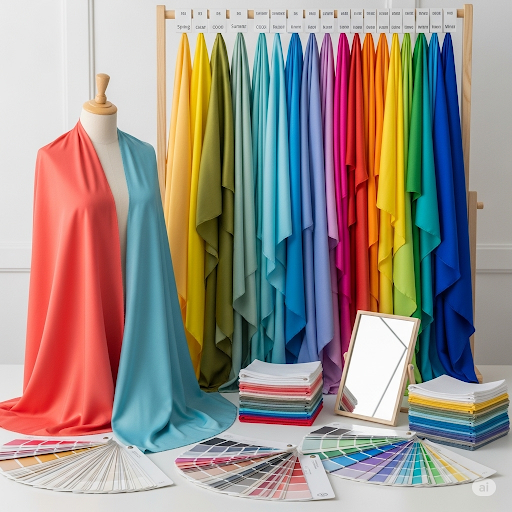
Color analysis is everywhere these days. Everyone from celebrities to influencers are getting their colors analyzed and posting it. It really is an amazing way to have an instant glow-up. The trouble is, if you’re not a celebrity or influencer, it can seem like an unnecessary cost. As expensive as it can be, I think it really can be a good investment since your season stays the same for your whole life. But, I understand that not everyone wants to invest in it without a taste of what it can do for them. While I don’t think that the DIY approach is just as good as getting a professional to assess your colors, it can be helpful and fun! So, my amateur analysts, here are 5 tips to get you started:
- Don’t use AI. Not to malign my good friend Chatty, but ChatGPT isn’t equipped to analyze you. I know my season, and I tried it in a few different ways to see if it was accurate. Nope. First, the color hex trick that people are trying only assesses your overtone. Not your undertone, which is the key to color analysis. More often than not, it will tell you that you’re a warm season. I am a soft summer, and even with the hex numbers of my eyes and natural hair color being cool, it still counted me as an autumn because of the warmth in my skin’s overtone. It also isn’t great at generating a color palette when you do know your season. Soft summers need muted colors, and my AI generated palette had bright red and black on it. Not even close to accurate.
- Start with metallics. This is the fastest way to rule out several possible seasons at once. If you look absolutely jaundiced in yellow or as pale as a ghost in cool, you have cut out half of the seasons in one fell swoop. If you look equally good in both, then you can cut out at least 4 of the sub-seasons. Disclaimer: This does require a full drape. Just trying a piece of jewelry against your wrist will not be enough. If you can, go to a fabric store and look for a metallic fabric. Get one silver and one gold. Once you’re home, pull your hair back and cover it with a white towel. Wear a white shirt and make sure you have no makeup on. Have nothing on or around you that can influence how the color looks on you. Then, sit in some indirect natural light and look in the mirror. Drape one and see what it does for your skin. Does it accentuate redness and shadows, or make them fade into the background as your other features stand out? In the right shade, the dark circles and redness will be less noticeable. The wrong color will emphasize them. Be careful when deciding that you look “brighter” in warm colors, though. One person’s “brighter” is another person’s “jaundiced”. That’s why it takes some real comparison and attention to the small details.
- Assess your contrast. This is another great way to rule out a lot of possibilities at once. People with higher contrast between their features will be able to rule out light and soft sub-seasons right away. People with very little contrast can knock out the deep sub-seasons. This directly translates into how dark and bright your colors can be. A winter will have higher contrast and be able to wear darker and brighter colors than a summer. A light spring will need light, warm pastels that would make an Autumn with higher contrasted look washed out.
- Compare colors of the same value. The value of a color is its lightness or darkness. If you don’t do the metallic fabric and are trying to decide between seasons using colors, this is key. If you compare a light blue in one season and a medium blue in another, it can skew the results. You might think you look better in one because of the value of the color and not the undertone. Even being cool-toned myself, if I put a medium green from the autumn palette on and compare it to a light green from my own summer season, people would probably say the warm color looks better on me than the cool because I look better in colors of medium value. This can make a big impact when you are trying to figure out your season.
- Compare temperature using the same color. Temperature is the warmth or coolness of a color. Choosing the same color in each temperature matters as much as choosing the same value. I have green-gray eyes and am cool. But, if I were to compare a warm green to a cool yellow, you would probably say that I look better in the green because you would notice the green of my eyes more, since they are similar to the drape. If I were to try on a warm green and a cool green, you would have a different answer. With a green in both warm and cool, your eye wouldn’t just notice the similar color and stop. It would be able to notice those subtle differences that help you choose your season. You would see how the cool color makes my skin look clearer and how my natural lip color is enhanced. When you try choosing the same color and the same value in both warm and cool, you have a much easier time narrowing your season down.
As you can see, there is a lot more involved in color analysis than you might think. This is why there really is no substitute for having your colors done professionally. If these tips have convinced you that it is a lot of work and you would rather hire someone, I advocate finding an analyst who is also a cosmetologist. We study color theory in beauty school, which is the foundation of color analysis. Having someone who can tell you your season that also has the right background to suggest the perfect hair color and makeup is ideal for a fresh new you. But, whether you choose to get it done professionally or just want to dabble in it on your own, following these tips can help you get started!
 Conversations with a Cosmetologist
Leave a comment